
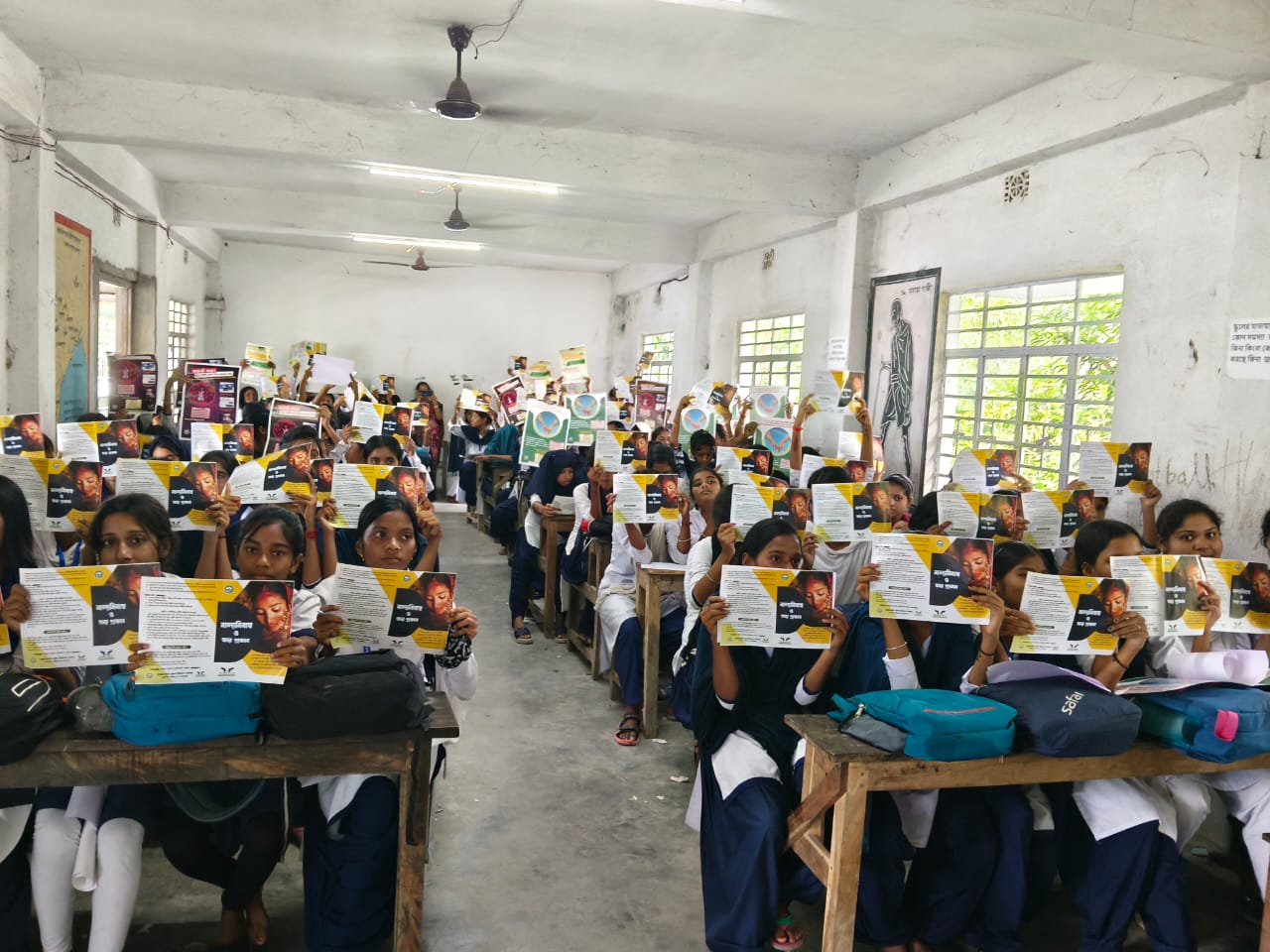
From Awareness to Action: What changed in our schools between 2024 to 2026 by our School Intervention Programme?
What can change in a school in just two years?
Sometimes, the biggest change is not in the infrastructure or the number of activities. It is in how children see themselves—as learners, problem-solvers and people who can speak up.
That is the change we are beginning to see through our school intervention programme.
Our School Intervention Programme was new, and we were still learning about the schools, the students and what kind of change the programme could create. We began by simply creating opportunities for students to listen, learn and engage.
Our Journey from 2024 to 2026
2024 : Starting Without Knowing the Outcome
The first year was about building a foundation. We entered schools with the intention of creating awareness and opening conversations around issues affecting children and adolescents.
At that stage, there was no way to know what these conversations would lead to.
2025: We started with awareness.
Students were introduced to issues such as child marriage, trafficking, cybercrime and child protection through discussions, activities and audio-visual sessions.
2026: Awareness is turning into action.
Students are now asking questions, identifying problems and taking steps to address them.
? From Knowing → Speaking Up
The Adolescents girls club in school, which now has more than 50 members, has become a space where girls are increasingly confident to take action.
Club members identified seven child marriage cases, approached their teachers and helped bring the cases to the attention of the appropriate support system.
The result? The marriages were successfully prevented and some are still reading in schools.
? From Complaining → Taking Collective Action
When girls noticed problems with their school toilets, they did not stop at complaining.
They went classroom to classroom, spoke with other students, gathered support and approached the Head Teacher.
Within a week, the issue was addressed.
A small example—but a significant shift in student leadership and ownership.
? From Watching → Questioning
Through audio-visual sessions on child marriage, trafficking and cyber crime, students are being encouraged to connect learning with the world around them.
Now, instead of simply watching, they are asking:
“Ma’am, do these things really happen through social media?”
This curiosity matters. It shows that students are beginning to question, reflect and recognise risks in their own digital environment.
Teachers, too, are showing growing interest in cybercrime and online safety.
? From Listening → Engaging
During an anger-management session, one student asked:
“Ma’am, please play that part again. I want to listen.”
Later, he was taking notes.
It was a small moment—but it showed something bigger: active engagement with learning.
Two Year: A Different Kind of Change.
2024: Starting → Understanding → Building the Foundation
2025: Awareness → Listening → Introduction to issues
2026: Questioning → Speaking up → Collective action → Leadership
The journey is still underway. But the direction is encouraging.
Students are no longer just listening to messages. They are beginning to use what they learn.
And perhaps that is the most meaningful change of all:
When a child stops waiting for someone else to act—and starts believing, “I can do something too.”
GGBK’s Takeaway & Learning
Over these years, we have seen an important shift—not just in what students know, but in what they believe they can do.
Awareness created the spark. Engagement gave it strength. Action turned it into change.
We learned that when children are given the right knowledge, space and encouragement, they begin to question what they see, speak up about what concerns them and take ownership of finding solutions.
The most powerful change is the growth of student agency—from waiting for adults to act to recognising, “I can do something too.”
For GGBK, this is the real learning: sustainable change begins when children are not only reached by workshop, but become active participants in creating change themselves.